Tether’s Market Cap Turns Negative—Is the Crypto Liquidity Party Over?
Tether’s Market Cap Turns Negative—Is the Crypto Liquidity Party Over?
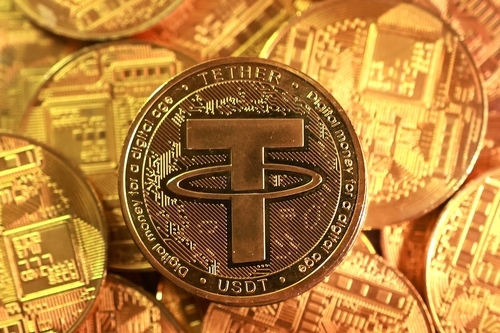
The market capitalization growth rate of Tether (USDT), the world’s largest stablecoin, has turned negative for the first time in months, heightening concerns over tightening liquidity and slowing trading activity across the broader cryptocurrency market.
According to crypto-focused media outlet BeInCrypto on February 11 (local time), Tether’s market capitalization has halted its steep upward trend seen in recent months and shifted into decline. BeInCrypto analyzed that this change, coupled with price corrections in major assets including Bitcoin (BTC), serves as a key indicator that risk aversion among market participants has intensified. Tether’s market cap, which had acted as a source of liquidity for the crypto ecosystem, beginning to shrink is interpreted as a sign that the market’s liquidity engine is cooling down.
On-chain data show that Tether’s market capitalization has fallen about 0.9% from its mid-January peak of $186 billion to around $185 billion. Although the numerical decline is not significant, data analytics firms such as Santiment are paying attention to the decreasing inflow of stablecoins to exchanges. The reduction in Tether supply, often viewed as sidelined capital ready to buy, suggests weakening momentum for a potential rebound in Bitcoin and other digital assets.
The overall stablecoin market, including USD Coin (USDC), has also contracted from $311 billion to approximately $298 billion, signaling a clear capital outflow. Notably, USDC’s market capitalization plunged about 6.5% during the same period, posting a steeper decline than Tether. This appears to reflect institutional investors cashing out regulatory-compliant stablecoins or reallocating portfolios toward traditional safe-haven assets such as gold.
The slowdown in stablecoin velocity serves as further evidence of fading market vitality. In previous bull markets, stablecoins circulated actively to purchase new assets, but recently liquidity provision has stagnated as investors focus more on preserving the value of existing holdings rather than making additional purchases. Analysts interpret this as the cryptocurrency market moving past an overheated phase and entering a full-scale reset, adding that it may take time to resolve supply-demand imbalances.
The deceleration in Tether’s growth is viewed as a natural correction amid global macroeconomic uncertainty and a tightening regulatory environment. As stablecoins, once the main capital artery of the market, enter a new phase of supply contraction, the speed of the cryptocurrency market’s recovery will likely depend on the return of fresh capital and the easing of policy uncertainties. Market participants are closely monitoring changes in stablecoin market capitalization, as they could signal the early stages of a price rebound.
Disclaimer: This article is for investment reference only, and we are not responsible for any investment losses incurred based on it. The content should be interpreted for informational purposes only.
<저작권자 ⓒ 코인리더스 무단전재 및 재배포 금지>
|


  많이 본 기사
English 많이 본 기사
|