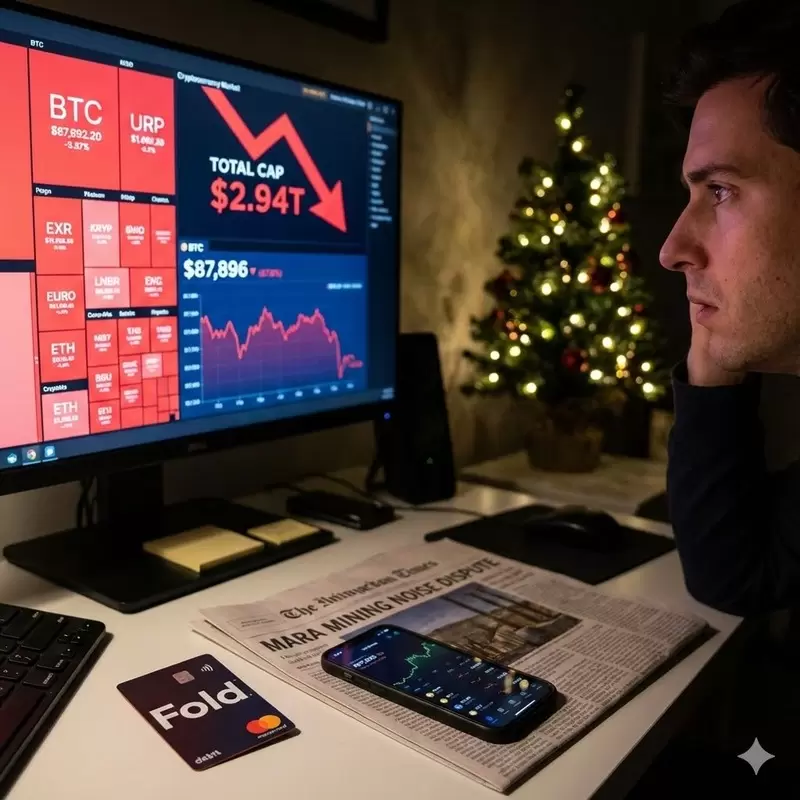
Accidentally received Bitcoin sold for cash… is pocketing tens of billions of won possible?
About 3 billion won moved to bank accounts… Bithumb says it is “persuading customers one by one”
Civil liability likely to be 인정ed if legal action is taken… criminal punishment leaves “room for judgment”
Bithumb is reportedly making every effort to recover all of the Bitcoin that was mistakenly distributed.
The company is also said to be quietly reviewing legal measures in case some customers refuse requests to return the funds.
A Bithumb official said in a phone call that the company is contacting customers who received the Bitcoin and immediately disposed of it on a one-on-one basis to persuade them to return it and to coordinate methods.
Earlier, at around 7 p.m. on the 6th, Bithumb intended to distribute a total of 620,000 won to 249 winners of a “random box” event but mistakenly entered the unit as “Bitcoin” instead of “won,” resulting in the payment of 620,000 Bitcoins.
Bithumb began blocking transactions and withdrawals from the mistakenly credited accounts 35 minutes after the incident, but some winners had already quickly sold 1,788 Bitcoins.
Bithumb succeeded in recovering most of the sold Bitcoin in the form of won or other coins, but as of 4:30 a.m. on the 7th, it had failed to retrieve the equivalent of 125 Bitcoins, worth about 13 billion won at current prices.
This amount reportedly includes about 3 billion won that dozens of winners withdrew into their personal bank accounts.
In the meantime, many cases have also been reported in which customers used the proceeds from selling Bitcoin on Bithumb to purchase altcoins.
The mistaken Bitcoin distribution is similar to an erroneous transfer, leading many in and outside the industry to predict that recovery would be possible if Bithumb pursues full-scale legal action.
Because the event specified winnings of 20,000 to 50,000 won per person, it is believed that recipients would have recognized receiving large amounts of Bitcoin as unjust enrichment.
If the company wins lawsuits such as claims for the return of unjust enrichment, customers may have to return the money obtained from selling the Bitcoin and could also be required to cover the company’s legal costs.
Opinions are divided on whether customers who appropriated the Bitcoin can face criminal punishment.
In a similar case, the Supreme Court in December 2021 acquitted an individual who had been indicted for transferring mistakenly sent Bitcoin worth 1.4 billion won to another of his own accounts.
The Supreme Court ruled that “virtual assets are not treated the same as legal tender under the law” and that “this does not mean they must be protected in the same way as legal currency when applying criminal law.”
However, some analysts say a change in precedent is possible.
A legal expert said that at the time, the court did not view virtual assets as “property” under criminal law, adding that given subsequent changes in social perception and the level of legal and institutional development, there appears to be room for a different judgment.
Disclaimer: This article is provided for informational purposes only and does not constitute legal or financial advice.
<저작권자 ⓒ 코인리더스 무단전재 및 재배포 금지>
|


  많이 본 기사
English 많이 본 기사
|